
Enzymes in Home Care: From Stain Removers to Catalysts
Microscopic powerhouses have quietly transformed the way we clean our homes. Today, they're doing even more behind the scenes in modern manufacturing and green chemistry.
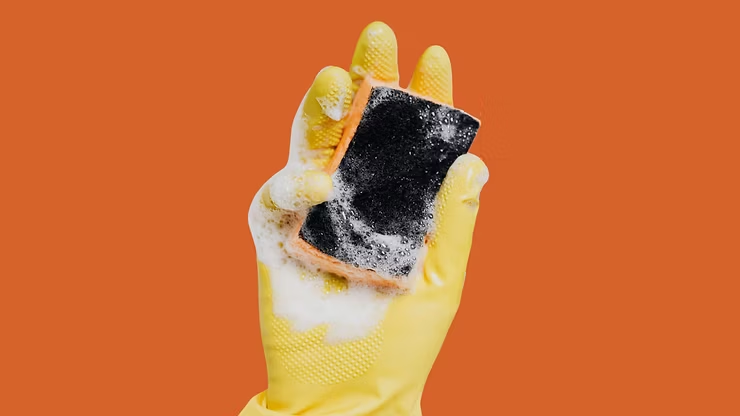
When you think of enzymes, your mind might jump to biology textbooks or the human digestive system. But these microscopic powerhouses have quietly transformed the way we clean our homes. Today, they're doing even more behind the scenes in modern manufacturing and green chemistry.
A Brief History: The Enzyme Revolution in Cleaning Products
The story of enzymes in home care began in the 1960s, when detergent manufacturers were searching for gentler yet more effective cleaning solutions. Traditional detergents relied on harsh chemicals and high temperatures to break down dirt and stains. These methods worked, but they came at a cost: fabric damage, high energy use, and environmental impact.
The introduction of proteases, the enzymes that break down protein-based stains such as blood, egg, and grass, was a game-changer. By the 1980s and 1990s, additional enzymes such as amylases (which digest starch), lipases (which tackle fats and oils), and cellulases (which help renew cotton fibres) became standard ingredients in laundry and dishwashing products.
The result:
- Superior cleaning performance even at lower wash temperatures
- Reduced energy consumption
- Gentler care for fabrics and surfaces
- Lower environmental footprint through reduced reliance on synthetic chemicals
These benefits reshaped the detergent industry, turning enzymes into a hallmark of smart cleaning.
Beyond Cleaning: Enzymes as Green Catalysts in Industry
Enzymes' potential extends far beyond the laundry room. The same catalytic properties that break down stains can be harnessed in biocatalysis, a field where enzymes replace traditional chemical catalysts in manufacturing processes.
Enzymes are used to drive reactions that are:
- Highly specific, reducing unwanted by-products
- Efficient, operating under mild conditions
- Environmentally friendly, since they're biodegradable and derived from renewable sources
This approach to manufacturing aligns with the growing demand for sustainable production methods that minimise waste and energy use.
Harnessing Enzymes in Our Biocatalysis Platform
At NorFalk, we leverage the power of enzymes as biocatalysts in our manufacturing processes. By integrating enzyme-based reactions into our surfactant production, we can create high-performance ingredients more efficiently.
Enzymes enable us to:
- Optimise production efficiency by driving reactions under mild conditions
- Minimise unwanted by-products
- Use renewable, biodegradable catalytic systems instead of harsh chemical catalysts
At NorFalk, we're turning nature's own catalysts to produce high-performance surfactants. To know more, reach out to sales@nor-falk.com or fill out our contact form.
Interested in our
bio-based surfactants?
Whether you're a formulator, brand partner, or researcher, we'd like to hear from you.